
Company Formation in the UAE - Company Formation in the UAE Guide


Company Formation in the UAE - Company Formation in the UAE Guide
Company Formation in the UAE : The Complete Guide for Foreign Investors and Entrepreneurs
Company Formation in the UAE: The Direct Answer and Executive Overview
Setting up a company in the UAE in 2026 allows local and foreign entrepreneurs to establish businesses across a wide range of commercial, professional, industrial and service activities, with 100% foreign ownership available for many business activities. Investors can generally choose between mainland companies, free zone companies and, where appropriate, branches of foreign companies. Company Formation in the UAE - Company Formation in the UAE Guide
The UAE has developed one of the region’s most sophisticated company-formation ecosystems. Registration procedures are increasingly digital, dozens of specialized free zones are available, and businesses can choose between Dubai, Abu Dhabi, Sharjah, Ras Al Khaimah, Ajman, Fujairah and Umm Al Quwain according to their market, activity and operating requirements.
However, company formation should never begin by simply searching for the cheapest UAE business license.
The correct sequence is:
Business Model → Business Activity → Target Customers → Emirate → Mainland or Free Zone → Legal Form → Ownership → License → Office Requirements → Tax → Banking → Employees → Operations.
The UAE Ministry of Economy confirms that investors of different nationalities can fully own companies in the UAE under the legal forms covered by the Commercial Companies Law, subject to the rules applicable to activities with strategic impact.
This represents an important change from the historical UAE company-formation model. Older online guides frequently state that a foreign investor must give 51% of a mainland company to an Emirati shareholder. That is no longer a general rule for many activities.
Nevertheless, 100% foreign ownership does not mean that every activity can be conducted under every structure.
Certain activities remain regulated and can require additional government approvals, professional qualifications, specific legal structures or other conditions.
Formation Element | What the Investor Should Understand |
Foreign ownership | 100% available for many activities |
Main structures | Mainland, Free Zone or foreign company branch |
Popular legal form | Limited Liability Company – LLC |
Free zones | Numerous specialized zones across the UAE |
Corporate Tax | General regime includes 0% and 9% bands; special free-zone rules may apply |
VAT | Standard rate is 5% |
Business license | Depends on the exact activity |
Office requirements | Depend on activity, jurisdiction and license |
Banking | Separate corporate bank account normally required for operations |
Employees | Visa, labor and payroll requirements apply |
Regulated activities | Additional approvals may be required |
Main principle | Choose the business structure before buying the license |
A successful UAE company therefore requires more than incorporation.
The founder must build a structure that can legally perform the activity, serve the intended customers, open suitable banking facilities, employ the required workforce, comply with tax obligations and scale without unnecessary restructuring.
Mainland vs Free Zone Companies and the Main UAE Business Structures
One of the first decisions facing an entrepreneur is whether to establish a mainland company or a free zone company.
Neither structure is automatically better.
The right answer depends on the company’s customers, activity, location, employees, tax profile, logistics and future expansion plans.
Mainland Company
A mainland company is generally licensed through the competent economic authority in the relevant emirate.
Examples include Dubai Department of Economy and Tourism and the Abu Dhabi Department of Economic Development.
Mainland structures can be particularly suitable for companies intending to operate broadly within the UAE domestic market.
Common mainland activities can include:
consulting, contracting, restaurants, retail, technology, professional services, real estate-related activities, trading and many other commercial businesses.
Foreign investors can fully own many mainland companies under the current ownership framework.
This means the historical requirement for a 51% UAE national shareholder no longer applies as a general rule to many activities.
However, activities with strategic impact and other regulated sectors can remain subject to specific conditions.
Free Zone Company
A free zone company is incorporated within one of the UAE’s specialized economic zones.
The UAE has developed numerous free zones, many of which focus on particular sectors or business models.
Examples of free-zone ecosystems can include:
technology, commodities, logistics, media, financial services, manufacturing, consulting, e-commerce and international trade.
Free zones are attractive because they can offer:
100% foreign ownership, specialized business infrastructure, streamlined licensing, immigration services and access to industry-specific ecosystems.
But the phrase “free zone” does not mean that every free zone offers the same rules, costs or benefits.
A company should compare:
permitted activities;
license cost;
office requirements;
visa allocation;
banking suitability;
customer location;
logistics;
corporate tax treatment;
renewal cost;
expansion possibilities; and
market-access requirements.
Choosing a free zone simply because its initial package is cheap can become an expensive mistake later.
Mainland vs Free Zone
Factor | Mainland Company | Free Zone Company |
Foreign ownership | 100% for many activities | Generally 100% |
Domestic UAE business | Often highly suitable | Depends on activity and operating model |
International business | Suitable | Often highly suitable |
Sector specialization | Depends on activity/emirate | Many zones specialize by industry |
Office requirements | Depends on license/activity | Varies significantly |
Visa capacity | Depends on structure/premises | Depends on package and facilities |
Corporate Tax | General UAE rules | Special Qualifying Free Zone rules may apply |
Setup cost | Varies | Varies substantially |
Retail activity | Often suitable | Depends on structure |
Import/export | Suitable | Many zones designed for trade |
Future expansion | Strong | Depends on zone and structure |
The correct decision should therefore begin with:
Where are the customers?
If the business primarily serves UAE mainland consumers or businesses, a mainland structure may deserve strong consideration.
If the company primarily conducts international consulting, holding, logistics, technology or international trading activities, certain free zones may provide a strong fit.
But the activity must always be evaluated individually.
Limited Liability Company – LLC
The LLC is one of the most widely used corporate forms in the UAE.
It provides a separate corporate structure and can generally be suitable for privately held businesses with one or multiple shareholders.
An LLC may be relevant for:
trading companies, consulting businesses, restaurants, technology companies, e-commerce companies, professional services and many other commercial activities.
The UAE Ministry of Economy confirms that a single natural or legal person may own an LLC.
This gives founders substantial flexibility when creating wholly owned businesses.
Foreign Company Branch
An international company may also consider opening a UAE branch instead of incorporating a separate subsidiary.
A branch generally operates as an extension of the foreign parent company rather than as an entirely independent shareholder-owned entity.
This may be appropriate where the foreign company wants to conduct its existing business directly in the UAE.
However, the parent company should carefully evaluate liability, tax, banking, contracts and regulatory implications before choosing the branch structure.
Question | UAE Subsidiary | Foreign Branch |
Separate corporate entity | Generally yes | Generally tied to foreign parent |
Ownership | Parent/shareholders | Foreign parent |
Liability structure | Depends on legal form | Parent exposure requires analysis |
External investors | Easier to accommodate | Generally less suitable |
Local expansion | Strong flexibility | Suitable for specific models |
Governance | Company-level | Parent/branch structure |
Exit options | More flexible | Different considerations |
For many international groups, the decision between a subsidiary and branch should be reviewed with qualified legal and tax professionals.
How to Establish a Company in the UAE Step by Step
The UAE company-formation process is increasingly digital, but the exact procedure depends on the emirate, business activity and jurisdiction.
A typical company-formation journey can be structured as follows:
Stage | Main Action |
1 | Define the business model |
2 | Select the exact business activity |
3 | Choose the emirate |
4 | Compare mainland and free zone |
5 | Select the legal structure |
6 | Determine ownership |
7 | Reserve the trade name |
8 | Obtain initial approvals where required |
9 | Prepare incorporation documents |
10 | Arrange premises where required |
11 | Obtain additional regulatory approvals |
12 | Pay government and licensing fees |
13 | Receive the business license |
14 | Complete immigration/labor registrations |
15 | Complete Corporate Tax/VAT requirements |
16 | Open the corporate bank account |
17 | Recruit employees if required |
18 | Begin operations |
The first step—selecting the business activity—is more important than many founders realize.
A founder might say:
“I want to establish a technology company.”
But “technology” can mean software development, cybersecurity, fintech, cloud services, IT consultancy, e-commerce, artificial intelligence or telecommunications.
These activities may not have identical licensing requirements.
Similarly, “real estate” can include:
brokerage, property management, development, holiday homes, real estate consultancy and other services.
The exact activity affects the license and potentially the regulator.
Choosing the Emirate
Dubai is the most internationally recognized UAE business location, but it is not automatically the best location for every company.
Dubai can be particularly attractive for:
international trade, technology, tourism, hospitality, real estate, finance, consulting, e-commerce and professional services.
Abu Dhabi can be highly relevant to:
energy, industry, financial services, technology, government-related business and larger strategic projects.
Sharjah can offer strong opportunities in:
industry, logistics, education, manufacturing and trade.
Ras Al Khaimah can be attractive for tourism, manufacturing, international business and certain cost-sensitive structures.
Ajman, Fujairah and Umm Al Quwain can also provide appropriate structures depending on the project.
The best emirate should be selected using:
Customers + Employees + Logistics + Rent + Regulation + Infrastructure + Cost.
Choosing and Reserving a Trade Name
The company must select a trade name that satisfies the applicable naming requirements.
A good trade name should also work commercially.
Founders should consider whether the name:
is easy to pronounce, works internationally, remains relevant if the company expands and can be protected as a brand.
Trade-name registration should not be confused with trademark protection.
A registered company name does not automatically provide complete intellectual-property protection for the brand.
Businesses investing significantly in branding should separately evaluate trademark registration.
Initial Approval and External Approvals
Depending on the activity, the company may require initial approval and approvals from other regulators.
For ordinary commercial activities, the process can be relatively straightforward.
Regulated industries can involve substantially more work.
Examples include:
financial services, healthcare, education, food, tourism, transportation, telecommunications and real estate.
A fintech company, for example, should not assume that obtaining a general technology license authorizes it to provide regulated financial services.
A medical clinic requires healthcare approvals.
A real estate brokerage may require approvals from the relevant real estate authority.
The correct rule is:
Company license first does not always mean permission to perform every intended service.
Preparing Incorporation Documents
Required documents vary according to the shareholders and company structure.
Individual founders may generally need identity and passport information and other documentation requested by the relevant licensing authority.
Corporate shareholders can require additional documents such as:
certificate of incorporation, constitutional documents, board resolutions and beneficial ownership information.
Foreign corporate documents may require authentication or legalization depending on the procedure.
The company should confirm requirements before preparing international documents because legalization can take time.
Business Premises
Office requirements vary significantly.
Some free zones offer flexi-desk or shared workspace packages.
Other businesses require physical offices, shops, warehouses, restaurants, factories or clinics.
Premises should never be leased solely because the price is attractive.
The founder should confirm that the location can legally support the intended activity.
This is particularly important for:
restaurants, warehouses, healthcare, education, industrial facilities and customer-facing retail businesses.
Receiving the Business License
Once the required documentation, approvals, premises requirements and fees are completed, the relevant authority can issue the business license.
The license normally identifies the company and permitted activities.
But receiving the license is the beginning of the operational phase—not the end of the setup process.
The company may still need:
immigration establishment records, employee registrations, tax registrations, banking, insurance, accounting systems and other regulatory approvals.
Company Formation Costs, Corporate Tax, VAT and Banking in the UAE
There is no single universal cost for establishing a company in the UAE.
A statement such as:
“It costs AED 10,000 to start a company in Dubai”
can be misleading because it may refer only to one license package.
The real startup cost can include:
License + Registration + Immigration + Visas + Office + Deposits + Regulatory Approvals + Banking + Professional Services + Insurance + Employees + Technology + Marketing + Working Capital.
The total can therefore range from a relatively modest amount for a simple service company to substantial capital for a restaurant, trading company, clinic, factory or regulated financial business.
Investors should separate three different numbers:
Cost Category | Meaning |
Formation Cost | Cost of legally creating/licensing the company |
Launch Cost | Cost required before customers can be served |
Working Capital | Cash required to keep operating until the business generates sufficient cash |
The third number is often the most important.
A company may cost AED 20,000–30,000 to establish but require several hundred thousand dirhams to survive its first year.
Free Zone Company Costs
Free zone packages vary substantially.
Pricing may depend on:
license type, number of activities, visas, office space, facility type and additional services.
A low-cost package may be appropriate for a solo consultant.
It may not be appropriate for a company that needs five employees, a warehouse and significant local operations.
When comparing free zones, founders should calculate three-year cost, not simply first-year promotional pricing.
Consider:
initial registration;
annual renewal;
visas;
establishment card;
office;
amendments;
additional activities; and
potential restructuring.
Mainland Company Costs
Mainland setup costs also depend on the emirate and activity.
The company may incur costs for:
trade-name reservation, initial approval, license, incorporation documentation, premises and external approvals.
Certain activities can have significant facility requirements.
A restaurant’s largest startup expense may not be the license.
It may be fit-out.
A logistics company may spend more on warehouses and vehicles.
A technology company may spend more on employees and software.
Therefore, license cost should never be used as a proxy for total investment.
UAE Corporate Tax
The UAE Corporate Tax regime is now an essential part of company planning.
Under the general framework:
Taxable income up to AED 375,000 → 0%
Taxable income above AED 375,000 → 9%
The 9% rate applies to taxable income above the threshold rather than automatically to the company’s entire revenue.
Businesses should distinguish carefully between:
Revenue → Accounting Profit → Taxable Income → Corporate Tax.
They are not the same thing.
Free-zone companies also require special attention.
A Qualifying Free Zone Person may benefit from a 0% Corporate Tax rate on qualifying income, subject to meeting the applicable requirements.
Income that does not qualify can receive different treatment.
Therefore:
Free zone ≠ automatically tax free.
A company should determine its Corporate Tax position based on actual activity, customers, transactions and legal structure.
UAE VAT
The standard UAE VAT rate is currently 5%.
VAT registration requirements depend on taxable supplies and the applicable thresholds and rules.
VAT should not simply be treated as a permanent 5% business cost.
A VAT-registered company can potentially recover eligible input VAT subject to the applicable conditions.
Accounting systems should therefore be configured correctly from the beginning.
Corporate Bank Account
Opening a UAE corporate bank account is a separate process from obtaining a business license.
Banks conduct KYC, AML and beneficial-ownership checks.
They may review:
shareholders, beneficial owners, business activity, expected turnover, customers, suppliers, source of funds and countries involved in transactions.
A company can therefore be legally incorporated but still require additional time before its banking is fully operational.
Founders should prepare a strong banking file.
This can include:
company documents;
shareholder documents;
business plan;
website;
contracts;
invoices or purchase orders;
source-of-funds evidence;
customer information; and
expected transaction profile.
A vague company with no clear commercial activity can face greater banking difficulties than a business with a well-documented operating model.
Visas, Employees, Accounting and Operational Readiness
Company formation can provide a structure through which founders and employees may obtain UAE residence visas, subject to the applicable immigration requirements.
However, visa eligibility and allocation depend on the company structure, jurisdiction, facilities and other conditions.
Free zone packages may specify a particular number of visas.
Mainland companies can have different workforce and premises considerations.
Founders should therefore determine staffing requirements before selecting a company package.
A solo consultant and a 20-person sales company should not necessarily use the same setup.
Employment
Hiring employees creates additional responsibilities.
The business should budget for more than monthly salaries.
Employment cost can include:
salary, visa, medical insurance, recruitment, payroll, leave, end-of-service obligations and other employment-related expenses.
Depending on the company and applicable rules, Emiratisation requirements may also be relevant.
Workforce planning should therefore form part of the feasibility study.
Accounting and Bookkeeping
Accounting should begin with the first company transaction.
Businesses need reliable records for:
revenue, expenses, payroll, VAT, Corporate Tax, assets, liabilities, receivables, payables and banking.
Founders should avoid mixing personal and company money.
A separate corporate account and documented expense process improve both compliance and management.
The founder should receive monthly financial information showing:
Metric | Why It Matters |
Revenue | Measures sales |
Gross Margin | Measures direct profitability |
Operating Expenses | Shows overhead |
Net Profit | Measures accounting performance |
Cash Balance | Shows survival capacity |
Receivables | Shows money customers owe |
Payables | Shows obligations |
Runway | Shows how long available cash may last |
A company can be profitable on paper and still run out of cash.
This occurs when customers pay slowly while salaries, rent and suppliers must be paid immediately.
Cash-flow management is therefore one of the most important responsibilities after incorporation.
Intellectual Property and Brand Protection
Companies investing in a brand should consider intellectual-property protection early.
This can include:
trademarks, copyrights, software ownership, domains and contractual rights.
Technology founders should ensure that software developed by founders, employees or freelancers is legally owned or properly licensed to the company.
This becomes especially important during fundraising or acquisition due diligence.
An investor buying shares in a technology company expects the company to own the technology it claims to own.
Choosing the Right UAE Setup and Avoiding Common Company Formation Mistakes
The most common company-formation mistake is selecting a structure before defining the business model.
The founder sees an advertisement:
“Start your UAE company from AED X.”
The company is incorporated.
Later, the founder discovers that the license does not support the required activity, the location is unsuitable, additional approvals are needed or the structure does not fit the customer base.
The correct process is the opposite.
Design the business first. Register the company second.
Another mistake is assuming that every free zone is equivalent.
A free zone should be selected according to:
activity, market, banking, logistics, tax, visas, reputation, facilities and long-term strategy.
A third mistake is ignoring renewal costs.
An attractive first-year package can become more expensive when:
renewal fees, visa charges, office upgrades or activity amendments are added.
Another major mistake is believing that a business license automatically guarantees a corporate bank account.
It does not.
Banking is subject to the financial institution’s compliance procedures.
Another mistake is ignoring Corporate Tax because the company is in a free zone.
The company must determine whether it qualifies for any special free-zone treatment.
Another mistake is choosing Dubai automatically.
Dubai is an excellent location for many businesses, but another emirate may offer better economics for a particular industrial, logistics, tourism or cost-sensitive project.
A founder should also avoid issuing large ownership percentages casually.
Two friends may create a 50/50 company because it appears fair.
But what happens if one founder stops working?
What happens if more money is needed?
What happens if they disagree?
What happens if one wants to sell?
Founders should document:
ownership, responsibilities, management powers, capital commitments, intellectual property, transfers, dispute mechanisms and exit.
Before establishing the company, complete this checklist:
Question | Yes / No |
Is the exact business activity defined? | |
Are target customers identified? | |
Is the best emirate selected? | |
Has mainland vs free zone been analyzed? | |
Is the legal structure appropriate? | |
Is 100% foreign ownership confirmed for the activity? | |
Are external approvals identified? | |
Are premises requirements confirmed? | |
Is the full setup cost calculated? | |
Are renewal costs included? | |
Is Corporate Tax understood? | |
Is VAT understood? | |
Is banking documentation prepared? | |
Are visa requirements known? | |
Are employee costs modeled? | |
Is working capital sufficient? | |
Are founder rights documented? | |
Is intellectual property protected? |
If several answers remain “no,” the founder should usually solve those issues before paying for incorporation.
How Vigo Group Can Support Company Formation in the UAE
Vigo Group can support entrepreneurs and international investors in organizing and coordinating parts of their company-formation journey in the UAE within the scope of its available services.
Establishing a UAE business can involve interaction with multiple parties, including:
company-formation providers, government authorities, free zones, legal professionals, tax advisers, accountants, banks, property providers, immigration services, insurance providers and sector specialists.
For an international investor, coordinating these steps from outside the UAE can be challenging.
Support may include helping organize the investor’s requirements, clarifying the intended business activity, comparing establishment routes, coordinating communication with specialized service providers, organizing required documentation and supporting selected logistical stages of the setup process.
The objective should be to move from:
“I want a company in the UAE”
to:
“This is the correct company structure for the business I actually intend to operate.”
A clear distinction must remain between general coordination and regulated professional services.
Legal opinions should be provided by appropriately qualified legal professionals.
Corporate Tax and VAT treatment should be verified with competent tax professionals and Federal Tax Authority guidance.
Bank-account approval remains subject to the bank’s compliance procedures.
Government licenses and approvals remain subject to the relevant UAE authorities.
Frequently Asked Questions About Company Formation in the UAE
1. Can a foreigner establish a company in the UAE?
Yes. Foreign investors can establish companies across a broad range of UAE business activities subject to the applicable licensing and regulatory requirements.
2. Can foreigners own 100% of a UAE company?
Yes. Full foreign ownership is available for many UAE business activities, subject to strategic-impact and regulated-sector requirements.
3. Do I need an Emirati partner to start a company?
Not for many activities. The historical 51% local-shareholder requirement no longer applies as a general rule to many mainland businesses.
4. What are the main ways to establish a UAE company?
The main choices generally include mainland companies, free zone companies and branches of foreign companies.
5. What is a mainland company?
A mainland company is generally licensed by the competent economic authority of the relevant emirate and can be suitable for businesses operating broadly in the UAE domestic market.
6. What is a free zone company?
It is a company incorporated within one of the UAE’s specialized economic free zones.
7. Which is better: mainland or free zone?
Neither is universally better. The answer depends on customers, activity, employees, tax, banking, premises and expansion plans.
8. Can a free zone company do business in the UAE mainland?
The answer depends on the activity, structure and applicable rules. The intended operating model should be confirmed before choosing the free zone.
9. What is an LLC in the UAE?
An LLC is a Limited Liability Company and is one of the most widely used legal forms for private UAE businesses.
10. Can one person own an LLC?
Yes. A single natural or legal person may own an LLC under the applicable UAE framework.
11. Can a foreign company open a branch in the UAE?
Yes, subject to the applicable licensing, documentation and regulatory requirements.
12. Which emirate is best for company formation?
There is no universal best emirate. Dubai, Abu Dhabi, Sharjah and the other emirates each offer different advantages depending on the business.
13. Is Dubai the best place to establish a company?
Dubai is highly attractive for many businesses, but another emirate may provide better costs, logistics or sector advantages for certain projects.
14. How much does company formation cost in Dubai?
There is no single price. Costs depend on the jurisdiction, activity, legal form, office, visas and approvals.
15. How much does a free zone company cost?
Free-zone costs vary substantially according to the zone, license, activities, visas and facilities.
16. What is the cheapest free zone in the UAE?
Prices change and the cheapest option is not automatically the best. The correct free zone should fit the actual business model.
17. How long does UAE company formation take?
Straightforward companies can often be established relatively quickly once all requirements are satisfied, while regulated or complex businesses can take longer.
18. Can I establish a UAE company remotely?
Many formation procedures can be completed electronically or remotely, although specific structures, banking or regulatory requirements may require additional steps.
19. Do I need an office?
It depends on the activity and jurisdiction. Some businesses can use flexible workspace arrangements, while others require dedicated premises.
20. Can I start an online business in the UAE?
Yes, provided the correct commercial activity and applicable e-commerce requirements are satisfied.
21. Can I start a consulting company?
Yes. Consulting activities are widely available, but the exact activity and any professional requirements should be verified.
22. Can I start an import-export company?
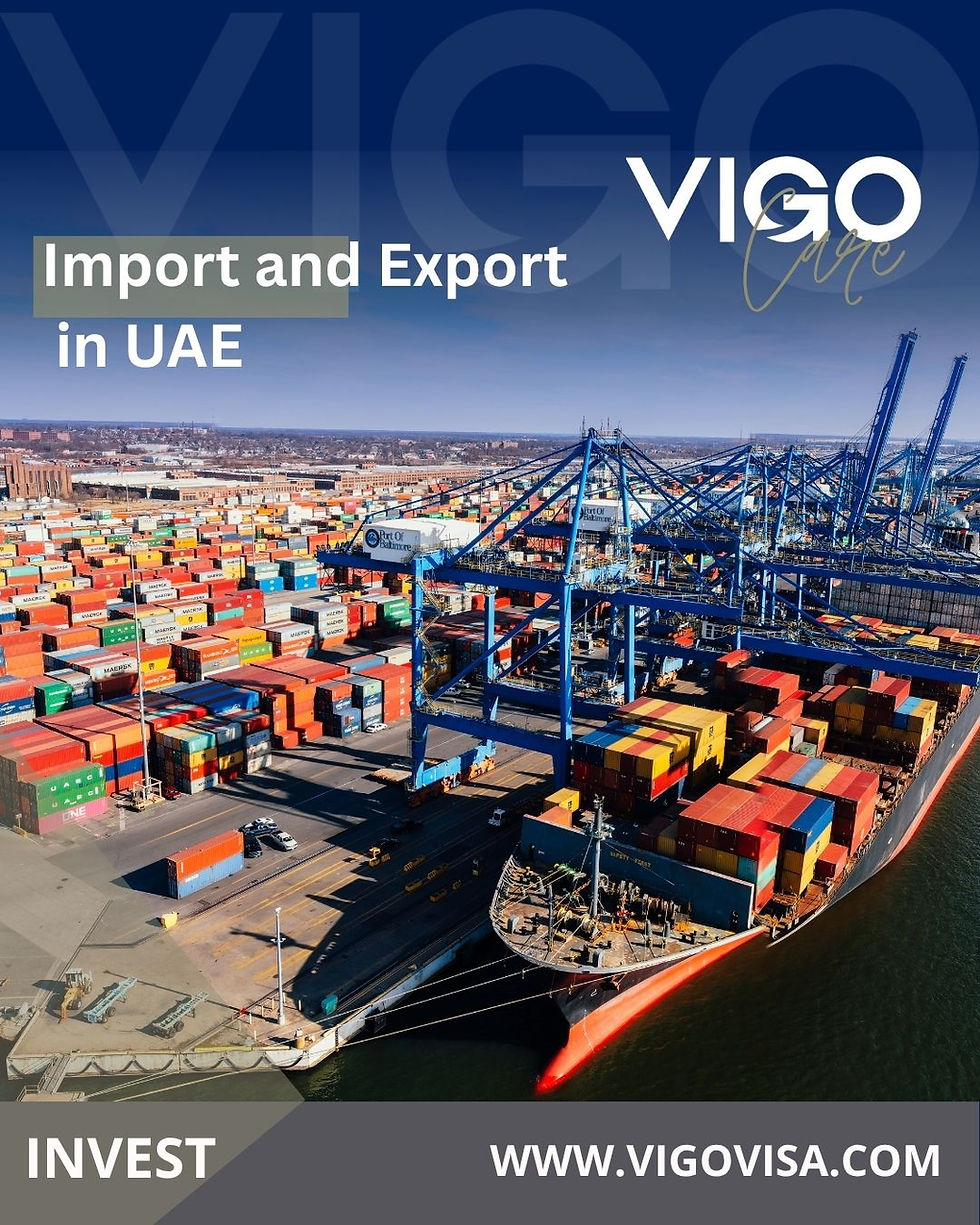
Yes. The company must hold the appropriate trading activity and comply with customs, product and regulatory requirements.
23. Can I establish a real estate company?
Yes, subject to the licensing requirements applying to the exact real estate activity and emirate.
24. Can I establish a tourism company?
Yes, but tourism activities can require approval from the relevant tourism authority.
25. Can I establish a restaurant?
Yes, subject to commercial licensing, premises, municipality, food-safety and other applicable approvals.
26. Can I establish a technology company?
Yes. Technology companies can operate through mainland or suitable free-zone structures depending on their activity.
27. Does a UAE company pay Corporate Tax?
Businesses are subject to the UAE Corporate Tax framework according to the applicable rules.
28. What is the UAE Corporate Tax rate?
Under the general framework, taxable income up to AED 375,000 is subject to 0%, while taxable income above that threshold is generally subject to 9%.
29. Are free zone companies exempt from Corporate Tax?
Not automatically. A Qualifying Free Zone Person may receive 0% treatment on qualifying income when the applicable conditions are satisfied.
30. What is the UAE VAT rate?
The standard VAT rate is currently 5%.
31. Does every UAE company need VAT registration?
No. VAT registration depends on the applicable registration thresholds and the nature and value of taxable supplies.
32. Does a company need a corporate bank account?
A dedicated corporate bank account is fundamental for normal business operations and proper financial control.
33. Is a corporate bank account guaranteed after company formation?
No. Banks perform independent KYC, AML and compliance assessments.
34. Can company formation provide UAE residency?
A company can provide a route through which eligible owners and employees may obtain residence visas subject to applicable immigration requirements.
35. How many visas can a company obtain?
Visa capacity depends on the company structure, jurisdiction, premises, free-zone package and applicable immigration rules.
36. Can a UAE company hire foreign employees?
Yes, subject to employment, immigration, visa and labor requirements.
37. What documents does a foreign investor need?
Requirements depend on whether the shareholder is an individual or corporate entity and on the jurisdiction. Passport and identity information are commonly required, while corporate shareholders require additional documentation.
38. What is the biggest mistake when forming a UAE company?
One of the biggest mistakes is purchasing a license before confirming the correct activity, jurisdiction, customer model, tax position and banking requirements.
39. Should I choose the cheapest company-formation package?
Not necessarily. A low-cost structure that does not fit the business can become more expensive through restructuring, additional licenses or operational limitations.
40. What is the most important rule for establishing a company in the UAE?
Do not begin by asking which license is cheapest. Define the business, customers, activity, emirate, mainland or free-zone structure, tax position, banking requirements and real operating budget first—then establish the company that fits that plan.
Sources, Editorial Methodology and Important Notice
This guide should be reviewed against current official UAE information from the Ministry of Economy and Tourism, relevant emirate economic departments, UAE free-zone authorities and the Federal Tax Authority.
The UAE currently permits broad full foreign ownership across company forms and economic activities, subject to rules applying to strategic-impact and regulated activities.
The UAE Corporate Tax framework generally applies a 0% rate to taxable income up to AED 375,000 and a 9% rate to taxable income above that threshold, while Qualifying Free Zone Persons may receive specific treatment on qualifying income subject to applicable requirements.
The standard VAT rate is currently 5%.
Company-registration procedures, license fees, immigration requirements, free-zone packages, Corporate Tax rules, VAT requirements and regulated-sector conditions can change.
Investors should therefore verify the exact requirements with the relevant UAE authority before incorporating or committing significant capital.
This guide provides general educational and commercial information only. It does not constitute individual legal, tax, accounting, financial or investment advice.
To View the Investment Guide Map in the UAE
Overview of the UAE
Why Invest in the UAE
Advantages of Investing in the UAE
Investment Opportunities in the UAE
Economy of the UAE
Companies Law in the UAE
Investment Law in the UAE
How to Invest in the UAE
Real Estate Law in the UAE
Import and Export Law in the UAE
Immigration and Residency Law in the UAE
Legal Services in the UAE
Import and Export in the UAE
Financial Affairs for Investment in the UAE
Tourism Investment in the UAE
Accounting Services in the UAE
Real Estate Investment in the UAE
Types of Companies in the UAE
Steps to Establish a Company in the UAE
Employment in the UAE
Building a Brand in the UAE
Logistical Support in the UAE
Consulting Services in the UAE
Marketing Services in the UAE
Financial Monitoring in the UAE
Feasibility Study in the UAE
Comprehensive Guide to Investment in the UAE
Comprehensive Guide to Establishing a Company in the UAE

بينما أدير مشاريع رقمية في المغرب، أتحقق يوميًا من واجهات فائقة السرعة مثل 1xBet Maroc أثناء عملي. ومع ذلك، أخصص دائماً وقتاً للقراءة عن التوسع التجاري وفرص الاستثمار. هذا المنشور حول خطوات تأسيس الشركات في الإمارات رائع جداً. الإعفاءات الضريبية والبنية التحتية هناك تجعلها الوجهة المثالية لأي شركة تبحث عن العالمية. تهانينا على هذا المقال الشامل!