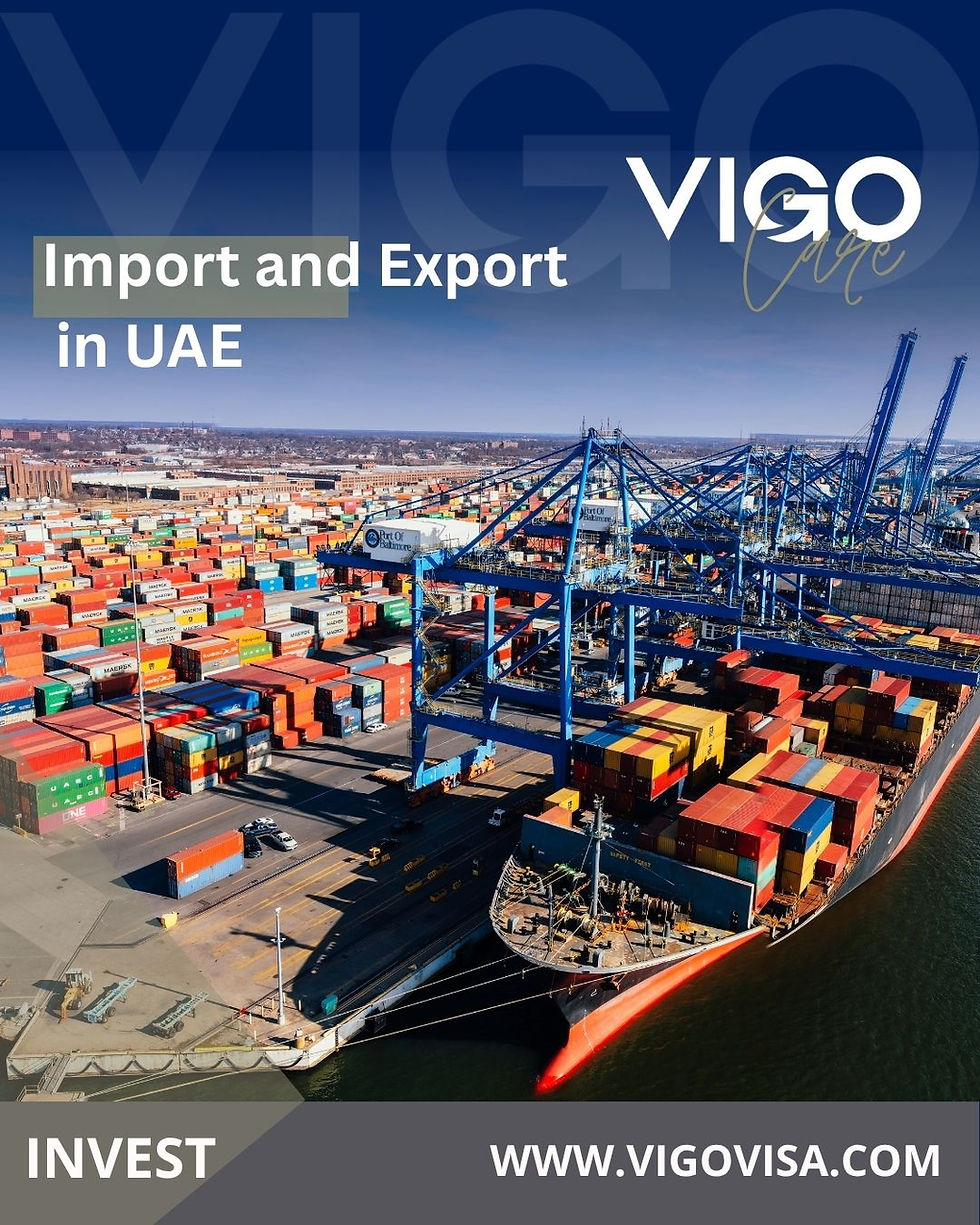
Investment Opportunities in the UAE - A Guide to the Best Sectors for Investment in the UAE


Investment Opportunities in the UAE - A Guide to the Best Sectors for Investment in the UAE
Direct Answer
The most notable investment opportunities in the UAE are currently concentrated across sectors supported by economic diversification and the transition toward a digital and knowledge-based economy. These include technology and artificial intelligence, advanced manufacturing, financial services and FinTech, e-commerce, logistics, tourism and hospitality, real estate, healthcare, renewable energy, Agri Tech , and food security. Investment Opportunities in the UAE - A Guide to the Best Sectors for Investment in the UAE
The UAE Ministry of Economy and Tourism officially identifies sectors such as healthcare, AgriTech, retail and e-commerce, education, smart cities and autonomous transportation, gaming and digital entertainment, manufacturing, information and communications technology, space, logistics, FinTech, tourism, and renewable energy among the country’s promising sectors and investment opportunities.
However, there is no single sector that can be considered the best choice for every investor. The appropriate opportunity depends on available capital, expertise, business model, target emirate, intended market, and the project’s requirements for infrastructure, employees, licensing, and regulatory approvals.
Therefore, an investment decision should not begin with the question:
“Which sector is the most profitable?”
A more useful question is:
“Which sector combines growing demand, the UAE’s competitive advantages, and the investor’s ability to execute successfully?”
Summary of Investment Opportunities in the UAE
Sector | Key Investment Opportunities |
Technology and AI | AI, software, cybersecurity, data, SaaS |
E-commerce | Online stores, platforms, digital services, commerce solutions |
Manufacturing | Advanced manufacturing, equipment, pharmaceuticals, food, supply chains |
Logistics | Warehousing, shipping, distribution, digital logistics |
Tourism and hospitality | Hotels, tourism experiences, specialized tourism, services |
Real estate | Development, management, and regulated real estate services |
Financial services | FinTech, payments, and regulated financial services |
Healthcare | Facilities, services, medical devices, digital health |
Energy and sustainability | Renewable energy, energy efficiency, water, green solutions |
AgriTech | Smart agriculture, agricultural technology, food security |
Education | EdTech, training, specialized education |
Creative economy | Gaming, content, media, digital entertainment |
Smart cities | IoT, smart buildings, smart mobility, urban solutions |
Space | Technology, services, and data related to the space sector |
This list does not represent an investment recommendation or ranking of sectors. It is an initial map of areas in which investment opportunities and economic activity are developing across the UAE.
Why Are There Broad Investment Opportunities in the UAE?
The UAE’s attractiveness as an investment destination is supported by several factors operating within one market: advanced infrastructure, a strategic location between Asia, Europe, and Africa, major airports and ports, extensive logistics networks, an international business environment, numerous free zones, and continued expansion of the non-oil and digital economies.
The UAE also allows foreign investors to participate in a broad range of economic activities covering trade, manufacturing, agriculture, services, education, healthcare, construction, and other sectors.
According to the Ministry of Economy and Tourism, there are more than 2,000 licensed economic activities available, while restrictions are concentrated within a limited number of areas subject to applicable regulations.
This means investment opportunities in the UAE extend beyond establishing a company to serve the domestic market. Businesses can also use the UAE as a base for serving Gulf, regional, and international markets.
How Do You Identify the Right Sector for Investment in the UAE?
A sector should not be selected based solely on its size.
A large market may require substantial capital, complex licensing, or specialized technical expertise. Meanwhile, a smaller sector may provide a more suitable opportunity for an investor with specific knowledge, technology, or customer relationships.
Any opportunity can initially be examined through six questions:
Question | What Should Be Analyzed? |
Is there demand? | Customer base and market growth trends |
Do I have an advantage? | Expertise, technology, brand, or distribution network |
How much capital is required? | Formation, operations, marketing, and liquidity |
How difficult is market entry? | Licensing, approvals, and competition |
Where should I start? | Emirate, free zone, or mainland |
How can the business expand? | UAE, GCC, exports, or digital markets |
A strong sector alone is not enough. The business model within that sector must also be viable.
Investing in Technology and Artificial Intelligence
The UAE identifies advanced technology, artificial intelligence, the digital economy, and research and development among the areas in which it aims to attract additional investment.
Opportunities extend across software development, cloud computing, artificial intelligence, data analytics, the Internet of Things, cybersecurity, automation, and digital solutions for businesses.
The UAE Foreign Direct Investment Report 2025 illustrates the importance of this sector. Software and IT services accounted for 33% of incoming greenfield FDI projects in the UAE in 2024, based on the number of projects covered by the report.
However, technology investment is not a single category.
There is a major difference between a small SaaS company, a financial platform, a cybersecurity company, a data center, and an AI company. Each model has different capital, regulatory, and market requirements.
Investing in E-Commerce
E-commerce combines a highly digital domestic market with the possibility of using the UAE as a base for serving regional markets.
The Ministry of Economy and Tourism identifies retail and e-commerce among promising sectors, including opportunities related to e-commerce platforms, digital products, and subscription-based services.
Investment opportunities are not limited to creating an online store.
The wider value chain includes payment solutions, inventory management, delivery, warehousing, digital marketing, commerce software, specialized marketplaces, and services for companies selling online.
However, the relatively low technical cost of launching an online store does not mean that building a successful e-commerce business is inexpensive.
Customer acquisition costs, inventory, logistics, returns, and competition can all significantly affect profitability.
Industrial Investment and Advanced Manufacturing
Manufacturing is one of the UAE’s economic diversification drivers, with the country supporting the sector’s development toward advanced technology, sustainability, and more localized supply chains.
The UAE also provides industrial and technology-related programs and incentives, including financing facilities for certain priority industries, Make it in the Emirates, and the National In-Country Value (ICV) Program, alongside other incentives depending on the project and relevant authority.
Potential areas include:
Food manufacturing, pharmaceuticals, equipment, electrical products, construction-related industries, packaging, industrial components, and technology-driven manufacturing.
However, establishing a factory is fundamentally different from establishing a service company.
Industrial investment involves different requirements for capital, location, energy, machinery, workforce, approvals, and supply chains.
A detailed operational and financial feasibility study should therefore be conducted before selecting an emirate or industrial zone.
Investing in Logistics
The UAE’s geographic position, infrastructure, ports, and airports make transportation and logistics a central part of its commercial model.
The UAE Foreign Direct Investment Report 2025 describes transportation and logistics as one of the country’s growth drivers, supported by expanding use of automation, robotics, data analytics, and multimodal transportation hubs.
Investing in logistics does not necessarily mean owning a large transportation fleet.
Opportunities can exist in warehousing, e-commerce fulfillment, distribution, supply-chain management, logistics software, specialized freight, and services connected to international trade, imports, and exports.
This highlights one of the UAE’s important strategic advantages: the ability to combine trade + warehousing + re-export + logistics services within an integrated business model.
Investing in Tourism and Hospitality
Tourism and hospitality represent a broad market that extends far beyond conventional hotel investment.
In 2025, hotel establishments across the UAE received 32.34 million guests, compared with approximately 30.75 million in 2024. Hotel revenues increased to AED 49.21 billion, while the occupancy rate reached 79.3%, according to the Ministry of Economy and Tourism.
This activity creates opportunities in accommodation, hospitality management, tourism experiences, specialized tourism, travel technology, and supporting services.
The UAE’s national tourism strategy also targets further growth in the sector’s economic contribution, making tourism part of a longer-term economic strategy rather than merely a seasonal industry.
This sector will be covered separately in our reference guide:
“Tourism Investment in the UAE: A Guide to Establishing Tourism Projects in the UAE.”
Investing in Real Estate
Real estate is one of the UAE’s most recognized investment sectors, but it is also an area where very different investment models must be distinguished.
These include purchasing property for rental income or long-term holding, real estate development, property management, brokerage and real estate services, commercial property, logistics property, and industrial real estate.
Each model has different capital requirements, risks, and regulations.
Investors should therefore look beyond price appreciation or rental levels and examine net returns, fees, financing, maintenance, occupancy, liquidity, location, and local regulations within the relevant emirate.
This sector will be covered in detail in:
“Real Estate Investment in the UAE: A Guide to Buying and Investing in Property in the UAE.”
Investing in Financial Services and FinTech
Financial services have undergone significant digital transformation in the UAE, while the regulatory environment supports the development of financial technology and innovation in financial services.
FinTech is also identified by the Ministry of Economy and Tourism as one of the UAE’s promising sectors.
Opportunities may include payment solutions, financial technology for businesses, financial automation, data management, and other technology-enabled services.
However, financial services require particular regulatory attention.
The exact nature of the activity determines whether licensing or approval from a specialized financial regulator is required.
The legal classification of the activity should therefore be established before incorporating the company or developing the product.
Investing in Healthcare
The Ministry of Economy and Tourism identifies healthcare as a promising sector, with opportunities including healthcare facilities, treatments, medical devices, e-health, and e-pharmacy.
The wider investment ecosystem can include healthcare facilities, laboratories, medical technology, devices, healthcare management software, and digital services.
Healthcare, however, is a regulated sector.
Projects may require professional licenses, facility licenses, and sector-specific approvals beyond an ordinary commercial license.
Regulatory analysis therefore becomes part of the feasibility study itself rather than an administrative step to address later.
Investing in Renewable Energy and Sustainability
Renewable energy is clearly included among the sectors targeted by the UAE.
The UAE Foreign Direct Investment Report 2025 identifies utilities and renewable energy among the country’s growth drivers, including solar and nuclear energy, smart grids, and energy efficiency.
Renewable energy projects represented 14% of incoming greenfield FDI projects in the UAE in 2024, according to the sector distribution by number of projects in the investment report.
Opportunities are not limited to developing power plants.
They can also include energy-efficiency services, consumption management, green technologies, water solutions, smart buildings, sustainable transportation, and emissions-reduction technologies.
This creates opportunities for large corporations, specialized technology companies, and B2B service providers.
Investing in AgriTech and Food Security
The UAE may not be a traditional agricultural market, but this challenge itself creates demand for technological solutions.
The Ministry of Economy and Tourism identifies AgriTech as a promising investment sector alongside opportunities connected with sustainable food consumption and agricultural technology.
Potential models include smart agriculture, controlled-environment farming, water technologies, food supply chains, waste reduction, and food-production technologies.
The opportunity is not necessarily to compete with traditional agriculture, but to develop solutions to challenges such as climate, water availability, productivity, and food security.
Investing in Education and EdTech
Education is also included among the promising sectors identified by the Ministry of Economy and Tourism.
Opportunities may include schools, training institutions, specialized educational services, EdTech platforms, vocational training, and corporate learning solutions.
However, some educational activities require specific approvals depending on the emirate and type of institution.
Investors should distinguish between a technology company providing an educational tool, a training center, and a regulated school or educational institution. Their requirements are not the same.
Investing in Gaming, Content, and the Creative Economy
Digital content, gaming, and entertainment have become part of the UAE’s new-economy sectors.
The Ministry of Economy and Tourism identifies Entertainment Streaming & Gaming among promising sectors and also highlights opportunities in subscription-based digital products, virtual reality, and augmented reality.
Potential opportunities include game development, digital production, content, creative technology, studios, and supporting services for brands and platforms.
These activities can benefit from the ability to use the UAE as a regional base while selling products or services to a global audience.
Investing in Smart Cities and Mobility
Smart cities and autonomous transportation are officially identified among the UAE’s promising sectors, alongside opportunities in smart buildings, the Internet of Things, sensors, robotics, and sustainable transportation.
This creates space for companies providing solutions to governments, businesses, property developers, transportation companies, and utilities.
However, sales cycles for infrastructure projects, government contracts, and large corporate customers can be longer than those in consumer businesses.
Investors should therefore plan carefully for liquidity, sales cycles, and contracting requirements.
Investing in the Space Sector
The Ministry of Economy and Tourism identifies space among the country’s promising sectors.
The space economy is not limited to launching satellites.
It includes data, analytics, applications, services, technologies, components, and software connected to the sector.
This field remains more specialized than conventional industries and may therefore be particularly relevant to companies with specific technology, expertise, or strategic partnerships.
Where Are Investment Opportunities Concentrated Across the UAE?
The UAE does not operate as an identical market across all seven emirates.
Dubai has a strong base in trade, tourism, services, logistics, real estate, the digital economy, and international business.
Abu Dhabi has a major ecosystem connected to energy, manufacturing, financial services, technology, and long-term investment.
Sharjah provides opportunities across manufacturing, education, culture, services, and trade.
Meanwhile, Ras Al Khaimah, Ajman, Fujairah, and Umm Al Quwain can offer different models across manufacturing, logistics, tourism, trade, and other activities depending on the project and available infrastructure.
The choice of emirate should not be based on reputation alone.
The more useful question is:
Where are the customers, suppliers, infrastructure, licensing conditions, and cost structure required by the business model?
Mainland or Free Zone?
Selecting the sector is not the only decision. Investors must also choose where and how to establish their companies.
Factor | Mainland | Free Zone |
Target market | Suitable for various UAE-focused models | Suitable for different models depending on the zone |
Licensing | Relevant economic authority | Free zone authority |
Activities | Broad range depending on emirate | According to the free zone’s activity list |
Infrastructure | Depends on location | May be specialized according to the zone |
Offices and facilities | Multiple market-based options | Packages and facilities depending on the zone |
International expansion | Available | Many zones are designed for international businesses |
Selection | Based on activity | Based on activity, market, and zone |
There is no universal rule that a free zone is always cheaper or that the mainland is always better.
The appropriate comparison should consider the total cost of the business, not merely the price of the license.
Investment Opportunities by Capital Size
Available capital can be used as an initial filter when examining opportunities, but it should not be treated as a final rule.
Relatively limited capital may be more compatible with certain professional services, digital businesses, software, e-commerce, and consulting activities, depending on licensing requirements.
Medium levels of capital may support models in trading, distribution, restaurants, light logistics, specialized technologies, and certain tourism activities.
Larger investments may include manufacturing, real estate, hotels, infrastructure, energy, and large healthcare projects.
There are many exceptions. An advanced technology company may require more funding than a traditional trading business, so every model should be analyzed independently.
Investing for the Domestic Market or for Export?
One of the most important decisions is identifying where revenue will come from.
There are four broad models:
UAE market: Selling products and services within the country.
GCC market: Using the UAE as a base to serve Gulf Cooperation Council markets.
International trade: Importing, warehousing, re-exporting, and distribution.
Global digital model: Establishing a company in the UAE while serving customers across multiple international markets.
The same sector can support more than one model.
A software company, for example, can serve the UAE, the wider region, or customers globally, while a hospitality business is generally more dependent on demand within the UAE.
How Should Investment Opportunities Be Compared?
Before selecting a project, investors can build an internal assessment framework such as:
Factor | Question |
Market size | Are there enough potential customers? |
Growth | Is demand expanding or declining? |
Competition | Can the company build a clear advantage? |
Margin | Can revenue cover costs and risks? |
Capital | Can the business fund operations until break-even? |
Licensing | Are complex approvals required? |
Employees | Are the necessary skills available? |
Suppliers | Is the supply chain reliable? |
Expansion | Can the business scale? |
Exit | Is there a realistic way to sell or transfer the investment later? |
The purpose is not to give each sector a universal “score,” but to compare opportunities according to the investor’s own circumstances.
Key Investment Risks in the UAE
A strong economy does not eliminate commercial risk.
Risks may include intense competition, high costs for certain locations and employees, inaccurate demand forecasts, dependence on a single customer, insufficient operating liquidity, inappropriate licensing, or entering a regulated sector without understanding its requirements.
Some investors also overestimate the advantage of simply “having a company in the UAE” and expect incorporation alone to generate sales.
In reality:
A company does not create a market. The business model, sales strategy, and execution do.
Common Mistakes When Searching for Investment Opportunities
Choosing a sector simply because it is trending: The popularity of artificial intelligence, for example, does not mean every business using the term “AI” has a viable economic model.
Relying only on market size: A large market may also contain intense competition.
Choosing the cheapest license: An unsuitable license can restrict the business later.
Ignoring operating capital: Company formation costs are not the total cost of launching a business.
Failing to test the market: Where possible, testing demand before committing significant capital can reduce risk.
Ignoring regulation: Certain sectors require additional approvals.
Expanding too early: Opening several branches or building a large team before validating the model can increase financial risk.
Activities with Strategic Impact
Despite the broad availability of foreign ownership, certain activities with strategic impact are subject to special rules.
The Ministry of Economy and Tourism states that Cabinet Decision No. 55 of 2021 identified seven activities with strategic impact. These cover areas including security and defense, banking, exchange, financing and insurance, currency printing, telecommunications, Hajj and Umrah services, Quran memorization centers, and services related to fisheries.
The relevant regulator, ownership conditions, and approval requirements vary by activity.
The statement “100% foreign ownership is available in the UAE” should therefore always be considered in the context of the specific activity and applicable regulatory requirements.
Steps for Evaluating an Investment Opportunity in the UAE
Begin by identifying the sector and the problem the business will solve.
Next, define the target customer and estimate demand, competition, and pricing.
Identify the appropriate emirate and company formation structure, then verify the activity, licensing requirements, and regulatory approvals.
Build a financial model covering company formation, premises, employees, marketing, inventory, taxes, financing, and operating liquidity.
Test a conservative scenario rather than considering only the growth scenario.
Finally, establish a market-entry plan and performance indicators that will determine whether the business should continue, expand, or modify its strategy.
In simplified form:
Market → Customer → Competition → Activity → Licensing → Cost → Funding → Sales → Expansion
Investment Checklist
Before making an investment decision, verify:
Genuine demand for the product or service.
Level of competition.
Target customer.
Pricing strategy.
Correct economic activity.
Appropriate emirate.
Mainland or free zone structure.
Ownership requirements.
Sector-specific approvals.
Company formation costs.
Operating capital.
Tax and accounting requirements.
Employees and visas.
Suppliers and supply chain.
Commercial contracts.
Trademark protection.
Marketing and sales strategy.
Break-even point.
Risk scenarios.
Expansion and exit strategy.
How Can Vigo Group Help Investors?
Vigo Group helps investors and entrepreneurs understand the commercial and procedural steps involved in entering the UAE market.
This includes understanding the business activity, comparing company formation options, selecting an appropriate emirate or free zone, and organizing company formation and related business, trade, import, and export procedures.
The correct process begins with understanding the project itself. The company structure and license should result from the investment model—not the other way around.
Specialized investment, financial, legal, and tax decisions should be made after studying the specific project and obtaining appropriate professional advice where necessary.
Frequently Asked Questions About Investment Opportunities in the UAE
What are the main investment sectors in the UAE?
Promising sectors officially identified include technology, manufacturing, logistics, FinTech, tourism, healthcare, renewable energy, AgriTech, education, e-commerce, and other new-economy sectors.
What is the best sector for investment in the UAE?
There is no single sector suitable for every investor. The appropriate choice depends on capital, expertise, market conditions, risk, and the business model.
Is technology a promising investment sector in the UAE?
Yes. UAE investment policies emphasize advanced technology, artificial intelligence, the digital economy, and research and development.
Is e-commerce an investment opportunity in the UAE?
Yes. E-commerce and digital retail are officially identified among promising sectors, although success depends on the product, logistics, marketing, and operating economics.
Is manufacturing suitable for investment?
The UAE supports manufacturing and priority industries through various programs and incentives, but feasibility depends on the specific project.
Are there investment opportunities in tourism?
Yes. UAE hotel establishments recorded 32.34 million guests and AED 49.21 billion in revenues during 2025, according to the Ministry of Economy and Tourism.
Can foreigners invest in UAE real estate?
Foreign investment opportunities exist subject to the ownership rules and designated areas applicable within each emirate. The local property regulations for the specific investment should be verified.
Is healthcare a promising sector?
Yes. The Ministry of Economy and Tourism identifies healthcare, digital health, medical devices, and healthcare facilities among promising opportunities.
Is renewable energy an important investment sector?
Yes. Renewable energy is among the sectors receiving strategic attention and investment activity in the UAE.
Are there opportunities in AgriTech?
Yes. The Ministry of Economy and Tourism identifies AgriTech among the country’s promising sectors.
Can investors enter the education sector?
Yes, although requirements differ between technology services, training activities, and regulated educational institutions.
Are there opportunities in gaming?
Yes. Gaming and digital entertainment are among the promising sectors identified by the Ministry of Economy and Tourism.
Does AI investment require large amounts of capital?
Not necessarily. Capital requirements vary substantially between a small software company and an advanced computing or infrastructure project.
Can a small software company be established in the UAE?
Yes. Different licenses and company structures are available for technology businesses, subject to selecting the correct activity and authority.
Is Dubai the only place to invest?
No. Each emirate offers different opportunities, ecosystems, costs, and sector strengths.
How should I choose an emirate?
Consider customers, suppliers, employees, infrastructure, licensing, costs, and the needs of the business model.
Is a free zone better for investment?
Not universally. The appropriate choice depends on the project, activity, and target market.
Is the mainland better?
The same principle applies. Mainland structures may suit certain models, while free zones may suit others.
Can a foreigner own 100% of a company?
Full foreign ownership is available across a broad range of activities, although strategic and regulated activities may have special requirements.
Are all sectors equally open to foreign investors?
No. Activities with strategic impact and certain regulated sectors are subject to specific requirements.
Does investing in the UAE require substantial capital?
It depends on the activity. Certain service and digital businesses can require significantly less capital than manufacturing, real estate, or hospitality projects.
What is the difference between formation costs and capital?
Formation costs cover the process of establishing the company, while operating capital funds the business until it generates sufficient cash flow.
Is a feasibility study necessary?
The greater the size and complexity of the project, the more important financial, operational, and market feasibility analysis becomes.
Should the market be tested before investing?
Where the business model permits, testing demand can reduce the risk of committing substantial capital before validating the market.
Can the UAE be used as an export base?
Yes. The country’s geographic position and trade and logistics infrastructure support trading, distribution, and re-export business models.
Can a UAE company serve customers outside the country?
Yes, subject to the company’s activity, license, applicable laws, taxation, and rules governing its transactions.
Is digital investment easier than traditional investment?
It may require fewer physical assets, but competition, marketing, technology, and regulation can still present substantial challenges.
Does every technology company need special regulatory approval?
No. It depends on the activity. Areas such as financial services, healthcare, and telecommunications may require additional regulation.
Does tourism investment mean establishing a hotel?
No. Tourism includes a wide range of businesses, services, experiences, and supporting technologies.
Does logistics investment require owning trucks?
Not necessarily. Business models can focus on software, warehousing, supply-chain management, fulfillment, coordination, and specialized services.
What are the main risks when investing in the UAE?
Important risks include misjudging demand, costs, competition, liquidity, or selecting an inappropriate activity or license.
Is the cheapest business license the best option?
Not necessarily. The license should allow the company to conduct the intended activity and support its business plan.
How can I determine whether an investment opportunity is viable?
Analyze the market, customers, competition, margins, capital requirements, licensing, execution capability, and scalability.
Can an investor acquire an existing UAE company instead of establishing a new one?
Yes, where permitted by the relevant legal structure and regulations, but appropriate legal, financial, and commercial due diligence should be conducted before an acquisition.
What is the first step when investing in the UAE?
Start by defining the customer, problem, business model, and sector, and then select the emirate, license, and legal structure.
Conclusion
Investment opportunities in the UAE are highly diverse.
The market extends far beyond real estate and conventional trade into technology, artificial intelligence, manufacturing, logistics, tourism, financial services, healthcare, renewable energy, AgriTech, education, and the creative economy.
The UAE’s official map of promising sectors reflects this broader transition toward a new economy based increasingly on knowledge, technology, innovation, and sustainability.
However, the presence of a fast-growing sector does not guarantee a successful investment.
A sustainable investment decision begins with demand, customers, the business model, competitive advantage, capital requirements, and regulation, followed by selecting the appropriate emirate, company structure, and license.
Therefore, the most suitable investment opportunity in the UAE is not necessarily the largest sector. It is the opportunity in which an investor can translate market demand into a viable, scalable, and sustainable business model.
Official References
UAE Ministry of Economy and Tourism – Promising Economic Sectors: Official reference covering promising sectors and activities with strategic impact.
UAE Ministry of Economy and Tourism – Promising Sector Details: Healthcare, AgriTech, e-commerce, education, smart cities, gaming, manufacturing, ICT, space, logistics, FinTech, tourism, and renewable energy.
Invest UAE – UAE Foreign Direct Investment Report 2025: FDI data, sector trends, growth drivers, and greenfield investment activity.
UAE Ministry of Economy and Tourism – Investment Incentives: Information on economic activities available to investors and industrial and investment incentives.
UAE Ministry of Economy and Tourism – Emirates Tourism Council, April 2026: Official 2025 tourism and hotel performance indicators.
UAE Ministry of Economy and Tourism – UAE Tourism Strategy and Sector Growth: Tourism indicators and UAE Tourism Strategy 2031 objectives.
UAE Ministry of Economy and Tourism – Investopia: New-economy sectors including FinTech, AI, the circular economy, e-commerce, space, and healthcare.
Author
Samer NajeebDirector of International Trade and Import-Export Strategies – Vigo Group
Samer Najeeb specializes in developing and analyzing reference content related to economics, investment, company formation, international trade, imports, and exports, with a focus on transforming official economic data and regulations into practical guides that help investors and entrepreneurs understand markets and make more informed decisions.
Articles published under his name form part of Vigo Group’s reference editorial content and are periodically reviewed using official government sources and updated economic data.
Editorial Disclosure: Samer Najeeb is a virtual editorial persona within the Vigo Group editorial team and does not represent a specific real individual.
Disclaimer
This guide is provided for general informational purposes only and does not constitute investment, financial, legal, or tax advice.
Investment opportunities, risks, and regulatory requirements vary according to the project, sector, emirate, licensing authority, and investor circumstances. Investors should conduct independent analysis, verify current requirements with official authorities, and obtain appropriate professional advice where necessary before making an investment decision.
To view the Investment Guides Map in the UAE
Investment Laws in the UAE: A Guide to Investors' Rights and Obligations in the UAE
Investment Opportunities in the UAE: A Guide to the Best Sectors for Investment in the UAE
Foreign Investment in the UAE: A Guide for Foreign Investors in the UAE
Real Estate Investment in the UAE: A Guide to Buying and Investing in Real Estate in the UAE
Industrial Investment in the UAE: A Guide to Establishing Factories and Industrial Projects in the UAE
Tourism Investment in the UAE: A Guide to Establishing Tourism Projects in the UAE
Digital Investment in the UAE: A Guide to Technology and E-commerce in the UAE
Types of Companies in the UAE: A Guide to Legal Forms of Companies in the UAE
Business Licenses in the UAE: A Guide to Types and Procedures of Licenses in the UAE
Free Zones in the UAE: A Guide to Establishing Companies in Free Zones in the UAE
Establishing a Company for Foreigners in the UAE: A Guide to Ownership and Management of Foreign Companies in the UAE
Corporate Taxes in the UAE: A Guide to Accounting and Tax Compliance in the UAE
Bank Accounts in the UAE: A Guide to Opening and Funding Business Accounts in the UAE
Residency for Investors in the UAE: A Guide to Company and Investment-Related Residency in the UAE
Employment in the UAE: A Guide to Company Employee Laws and Contracts in the UAE
Intellectual Property in the UAE: A Guide to Trademark Registration and Protection in the UAE
Importing in the UAE: A Guide to Customs, Shipping, and Clearance in the UAE
Exporting from the UAE: A Guide to Procedures, Markets, and Shipping Exports from the UAE
International Trade in the UAE: A Guide to Contracts, Payment, and Risk Management in the UAE
UAE Economy: A Guide to the Business Environment and Growth Opportunities in the UAE
Read also:
Investment Guide in Saudi Arabia
Investment Guide in Syria
Investment Guide in the UAE
Investment Guide in Azerbaijan
Investment Guide in Oman
Investment Guide in Qatar
Investment Guide in Spain
Investment Guide in Kuwait