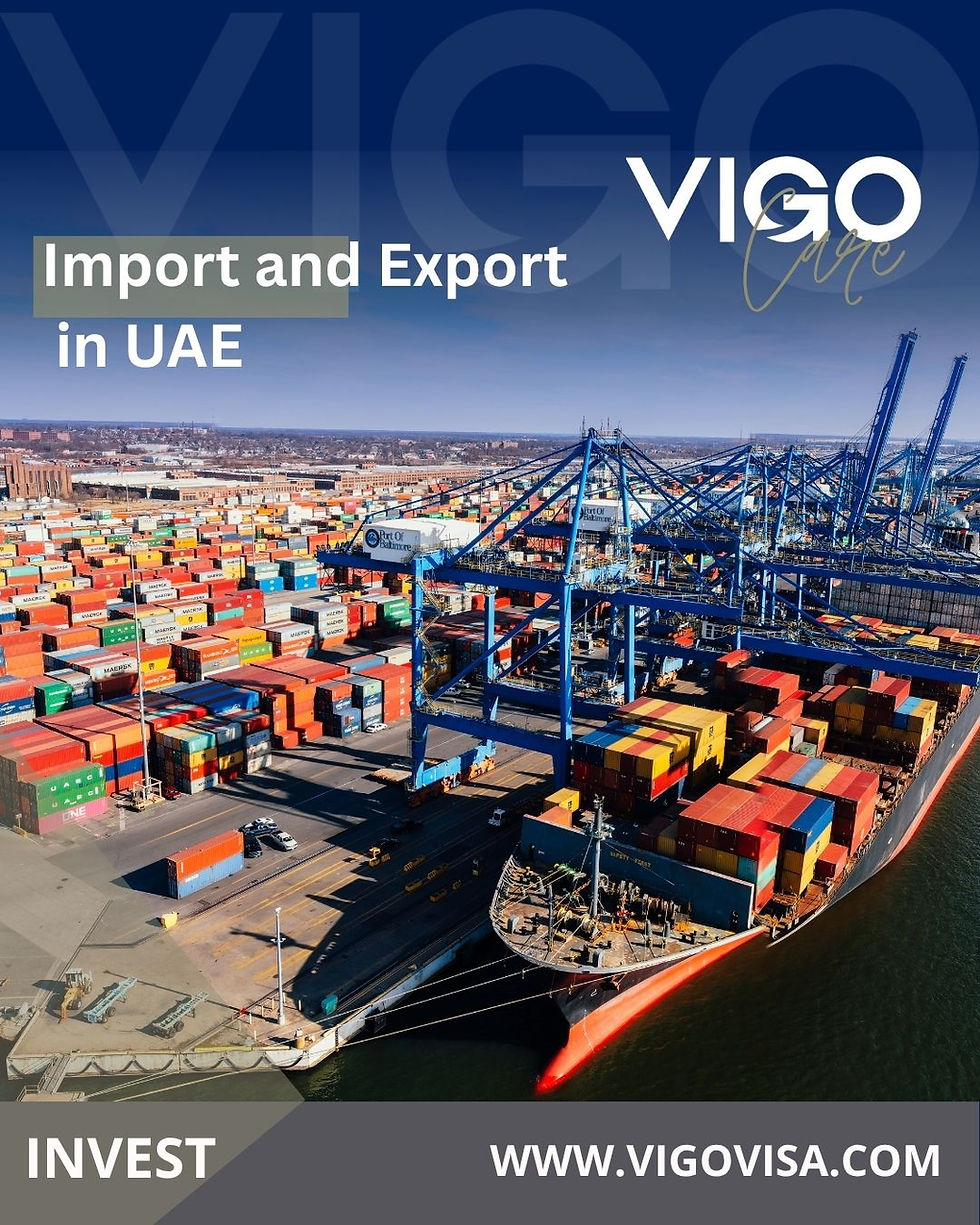
UAE Economy - A Guide to the Business Environment and Growth Opportunities in the UAE


UAE Economy - A Guide to the Business Environment and Growth Opportunities in the UAE
Direct Answer
The UAE economy is one of the region’s most diversified and internationally connected economies, and its performance is no longer defined by the oil sector alone. The UAE’s real GDP reached AED 1.776 trillion in 2024, growing by 4%, while non-oil GDP reached AED 1.342 trillion and grew by 5%. In the first quarter of 2025, non-oil activities accounted for 77.3% of GDP, with non-oil GDP growing by 5.3%. UAE Economy - A Guide to the Business Environment and Growth Opportunities in the UAE
For investors and entrepreneurs, the UAE’s economic appeal comes from a combination of an active domestic market, advanced infrastructure and logistics, diversified economic sectors, specialized free zones, full foreign ownership opportunities across many activities, and a strategic location connecting businesses with markets across the Gulf, Middle East, Asia, and Africa.
However, opportunities, operating costs, licensing requirements, and regulatory obligations can vary significantly depending on the emirate, sector, business activity, and company structure.
UAE Economy at a Glance
Indicator | Latest Official Data Available |
Real GDP – 2024 | AED 1.776 trillion |
Real GDP growth – 2024 | 4% |
Non-oil GDP – 2024 | AED 1.342 trillion |
Non-oil GDP growth – 2024 | 5% |
Non-oil share of GDP – Q1 2025 | 77.3% |
Non-oil GDP growth – Q1 2025 | 5.3% |
Foreign direct investment inflows – 2024 | USD 45.6 billion |
FDI growth – 2024 | 48.7% |
SMEs according to 2026 data | Approximately 1.33 million |
SME contribution to GDP | Approximately 63% |
Figures are based on the latest official government data available when this guide was updated.
How Did the UAE Economy Evolve From Oil to a Diversified Economy?
The modern UAE economy initially developed around oil and energy, but the country gradually expanded its economic base and diversified its sources of income.
Trade, manufacturing, financial services, real estate, tourism, transportation, logistics, technology, construction, and professional services have become major components of the economy.
Official figures demonstrate the scale of this transformation. Non-oil sectors accounted for 75.5% of GDP in 2024 and increased to 77.3% during the first quarter of 2025.
This does not mean that oil has become unimportant. Instead, it shows that the UAE has developed a broader and more diversified economic base.
The UAE’s future economic policies include targets to increase GDP to AED 3 trillion, raise non-oil exports to AED 800 billion, and increase foreign trade to AED 4 trillion while continuing to develop new-economy sectors.
These figures are government targets rather than results that have already been achieved.
Which Sectors Drive the UAE Economy?
There is no longer a single sector that can be considered the sole engine of the UAE economy. The current economic structure is based on several interconnected sectors, creating opportunities ranging from small businesses to major industrial and technology investments.
In 2024, transportation and storage was among the fastest-growing sectors, expanding by 9.6%, followed by construction at 8.4% and financial and insurance activities at 7%.
Accommodation and food services grew by 5.7%, while real estate activities expanded by 4.8%.
Trade, manufacturing, financial activities, construction, and real estate were also among the major contributors to non-oil GDP.
Sector | Importance to the UAE Business Environment |
Trade | Connects the UAE with regional and international markets |
Manufacturing | Supports domestic production, exports, and supply chains |
Financial services | Supports companies, investment, and international trade |
Real estate | Linked to population growth, tourism, investment, and urban development |
Tourism | Supports hospitality, restaurants, transportation, entertainment, and retail |
Transportation and logistics | Supports imports, exports, and re-exports |
Technology | Supports the digital economy, AI, and new services |
Construction | Benefits from infrastructure and urban development |
Investors should therefore avoid asking only:
“What is the best sector in the UAE?”
A more useful question is:
“Which sector best matches my capital, experience, target market, and revenue model?”
Trade in the UAE Economy
Trade occupies a central position in the UAE economic model because of the country’s geographic location, logistics infrastructure, transportation networks, ports, airports, and its role in imports and re-exports.
The UAE Ministry of Economy and Tourism provides an international trade map that allows businesses and investors to analyze foreign trade by country, commodity, imports, non-oil exports, re-exports, and other classifications.
Trade data should therefore be part of the market research process before entering an import or export business.
The UAE should not be viewed only as a consumer market. Depending on the business model, it can also serve as a regional distribution and re-export hub, which explains the importance of logistics services, warehouses, free zones, airports, and seaports within the country’s business ecosystem.
Manufacturing and Industrial Production
Manufacturing is one of the pillars of economic diversification in the UAE. According to the Ministry of Economy and Tourism, manufacturing accounted for 13.5% of non-oil GDP in 2024.
Industrial investment, however, differs substantially from establishing a service company.
Industrial investors may need to consider land or industrial facilities, energy requirements, raw materials, supply chains, warehousing, environmental and technical approvals, workforce requirements, customs procedures, and the competitiveness of the final product in domestic and export markets.
For this reason, low company formation fees do not necessarily mean that a particular location is the best place for a factory. Transportation efficiency, proximity to ports, warehouse costs, utilities, and supply chains can be more important than the cost of the business license itself.
Tourism and Hospitality
Tourism has become a significant component of the UAE economy.
According to the Ministry of Economy and Tourism, the travel and tourism sector contributed approximately AED 257 billion to GDP in 2024, equivalent to around 13% of GDP. Hotel establishments received approximately 30.7 million guests, while hotel occupancy reached 77.9%.
Investment opportunities in tourism are not limited to hotels.
The sector supports restaurants, transportation, travel services, events, entertainment, retail, medical tourism, digital services, marketing, destination management, and many other activities.
An investor can therefore benefit from tourism growth without necessarily owning a hotel or developing a large tourism project.
Technology and the Digital Economy
The UAE’s economic strategy increasingly focuses on knowledge-based industries, technology, innovation, and the new economy.
This direction is reflected in government strategies, specialized business zones, startup ecosystems, digital infrastructure, and investment initiatives.
Opportunities include software, e-commerce, artificial intelligence, fintech, cybersecurity, cloud services, digital platforms, and other technology-driven industries.
However, a supportive technology ecosystem does not guarantee the success of every technology company.
Product quality, market demand, competition, customer acquisition costs, regulation, funding, and the ability to scale regionally remain critical factors.
SMEs and Entrepreneurship in the UAE
The UAE business environment is not limited to large corporations.
In 2026, the Ministry of Economy and Tourism reported that small and medium-sized enterprises represented approximately 95% of all companies operating in the UAE, numbering around 1.33 million businesses.
SMEs provide more than 85% of private-sector employment and contribute approximately 63% of GDP.
This highlights the importance of SMEs within the UAE economy and demonstrates why professional services, trade, technology, e-commerce, food and beverage, tourism, and specialized services represent important parts of the business landscape alongside major investments.
Why Does the UAE Business Environment Attract Investors?
One of the UAE’s major advantages is the variety of ways businesses can enter the market.
Investors can choose between mainland company formation and numerous free zones depending on their activities and operating models.
UAE legislation also allows up to 100% foreign ownership across many mainland business activities, although certain strategic sectors and regulated activities remain subject to specific requirements.
Free zones offer different combinations of offices, warehouses, licensing options, administrative services, and specialized business ecosystems. Some focus on sectors such as technology, media, logistics, manufacturing, or financial services.
The UAE Government’s official portal indicates that the country has approximately 40 free zones serving a wide range of industries.
Investors should not choose an emirate or free zone based solely on advertising or the price of a formation package.
The appropriate location depends on customers, sales channels, warehouse requirements, visas, regulatory approvals, banking, taxation, and future expansion plans.
Mainland vs. Free Zone Companies in the UAE
Choosing between a mainland company and a free zone company is one of the most important decisions when establishing a business in the UAE.
Factor | Mainland | Free Zone |
Common use | UAE domestic market and diverse activities | International, specialized, or sector-focused businesses |
Licensing authority | Relevant economic authority in the emirate | Relevant free zone authority |
Foreign ownership | 100% available across many activities | Available according to free zone regulations |
Offices and facilities | Options across the local market | Solutions provided by the relevant free zone |
Activities | According to the license and approvals | According to activities permitted by the zone |
Mainland market access | Generally more direct depending on the license | Additional requirements may apply |
Free zone companies are governed by the rules of their respective free zone authorities, and additional government approvals may apply to regulated activities.
Direct access to the mainland market may also require additional licensing or arrangements depending on the activity and emirate.
Abu Dhabi, Dubai, Sharjah, and the Other Emirates
A common mistake is treating all seven emirates as identical business environments.
They operate within one country and a federal legal framework, but each emirate has its own economic characteristics, local authorities, free zones, infrastructure, and sector strengths.
Abu Dhabi has a strong presence in energy, industry, investment, technology, and large-scale projects.
Dubai has a broad ecosystem covering international trade, tourism, financial services, real estate, technology, the digital economy, and international business services.
Sharjah has significant activity in manufacturing, education, trade, and culture.
Ras Al Khaimah has developed a notable industrial and tourism base and provides options for manufacturing and other businesses.
Ajman, Umm Al Quwain, and Fujairah also provide different business opportunities, with Fujairah holding particular importance for maritime and logistics activities.
The question should therefore not simply be:
“Which is the best emirate?”
Instead, investors should ask:
“Which emirate best supports my specific business model?”
Foreign Investment in the UAE
Foreign direct investment inflows into the UAE reached USD 45.6 billion in 2024, compared with USD 30.7 billion in 2023, representing growth of 48.7%, according to government-published data based on the 2025 foreign direct investment report.
However, individual investors should not interpret rising FDI as a guarantee that their own projects will succeed.
FDI figures demonstrate the country’s ability to attract capital at the macroeconomic level. The success of an individual business still depends on its sector, competition, pricing, capital structure, management, compliance, and actual market demand.
Taxes and Compliance in the UAE Business Environment
Investment decisions should not be based on the assumption that the UAE is a completely “tax-free” business environment.
The country has a tax framework that includes Corporate Tax, Value Added Tax (VAT), and other obligations that may apply depending on the company and its activities.
The UAE Federal Tax Authority continues to publish and update decisions, legislation, and guidance relating to Corporate Tax. Businesses should therefore verify the rules in force when establishing and operating a company rather than relying on outdated information.
It is also important to distinguish between Corporate Tax and VAT. They are separate tax systems, and obligations under each may apply independently.
Where Are the Growth Opportunities in the UAE?
Growth opportunities in the UAE economy can be considered at three levels.
The first includes large established sectors such as trade, real estate, tourism, finance, logistics, and manufacturing. These markets can be substantial but may also be highly competitive.
The second includes new and rapidly developing sectors, including technology, artificial intelligence, the digital economy, fintech, and specialized services.
The third includes businesses that support the growth of other sectors.
For example, growth in trade creates demand for warehousing, transportation, customs clearance, and digital services. Tourism growth supports restaurants, transportation, marketing, entertainment, and hospitality services. Business growth creates demand for accounting, legal services, recruitment, technology, and professional services.
Looking at entire value chains can reveal opportunities that may not appear when searching only for the “best investment sector.”
Business Opportunities in the UAE
Sector | General Opportunity | Key Factors to Study |
Trade | Broad | Products, suppliers, customs, competition |
Technology | Growing | Product, market, scalability |
Tourism | Broad | Location, seasonality, licensing |
Real estate | Large | Emirate, area, returns, liquidity |
Manufacturing | Strategic | Energy, land, logistics |
Professional services | Flexible | Expertise, customers, licensing |
E-commerce | Growing | Marketing, logistics, margins |
Food and restaurants | Large and competitive | Location, costs, approvals |
Logistics | Important | Location, warehouses, customers |
Financial services | Advanced and regulated | Licensing, capital, compliance |
Note: These descriptions are general classifications and should not be interpreted as investment recommendations or expected-return forecasts.
Key Risks and Challenges
A strong economy does not eliminate business risk.
Potential challenges include intense competition in some sectors, operating costs, rents and labor expenses in certain locations, licensing requirements for regulated activities, and banking requirements.
Choosing an inexpensive license that does not properly fit the business activity can also create future costs, operational limitations, or restructuring requirements.
The same principle applies to taxation, accounting, contracts, employment, and intellectual property protection.
Investors should therefore distinguish between the ease of establishing a company and the economic viability of the underlying business.
Receiving a business license is the beginning of a company’s journey—not proof that the business model will succeed.
How Should You Study the UAE Market Before Investing?
Start by identifying the target customer, then evaluate demand, competitors, pricing, operating costs, and expected margins.
Next, determine which emirate best supports the business and whether a mainland or free zone structure is more appropriate.
Licensing, regulatory approvals, taxes, accounting, banking, residency, employment, and other operational requirements should be evaluated before committing substantial capital.
A useful sequence is:
Market first → Business model second → Location third → Legal structure and license fourth.
Not the other way around.
Common Mistakes When Entering the UAE Market
One of the most common mistakes is choosing a company structure or free zone before properly studying the market.
Other mistakes include focusing exclusively on licensing costs, overestimating demand, underestimating competition and marketing expenses, and failing to consider banking and tax requirements before formation.
Investors may also incorrectly assume that full foreign ownership removes regulatory obligations, or that every free zone is suitable for every type of business.
How Can Vigo Group Help?
Vigo Group helps investors and entrepreneurs understand the market before making company formation decisions.
This can include evaluating the country and sector, selecting an emirate and company structure, comparing mainland and free zone options, organizing the company formation process, and connecting investment planning with residency, commercial services, imports, and exports according to the needs of the project.
The objective is not simply to obtain a business license, but to develop a market-entry pathway that matches the investor’s activity and long-term plans.
UAE Market Entry Checklist
Before investing, make sure you understand:
Your target sector.
Your target customers.
Competitors and pricing.
The most suitable emirate.
Actual operating costs.
Company structure and licensing.
Additional regulatory approvals.
Tax and accounting requirements.
Business banking requirements.
Employees and residency requirements.
Suppliers and supply chains.
Expansion and exit plans.
If these questions cannot yet be answered clearly, the project may require additional research before incorporation.
Frequently Asked Questions About the UAE Economy and Business Environment
Does the UAE economy depend on oil?
Not entirely. Oil remains important, but non-oil activities now represent the majority of GDP. Their share reached 77.3% in the first quarter of 2025.
How large is the UAE economy?
Real GDP reached AED 1.776 trillion in 2024 according to the UAE Ministry of Economy and Tourism.
Is the UAE economy growing?
Real GDP grew by 4% in 2024. In the first quarter of 2025, GDP grew by 3.9% compared with the same period a year earlier.
What are the main non-oil sectors?
Major sectors include trade, manufacturing, financial services, construction, real estate, transportation, tourism, and technology.
Which UAE sectors are growing rapidly?
According to 2024 data, transportation and storage grew by 9.6%, while construction grew by 8.4%.
Is the UAE suitable for small businesses?
Yes. According to 2026 Ministry of Economy and Tourism data, SMEs represent approximately 95% of businesses operating in the UAE.
Can foreigners own 100% of a UAE company?
Full foreign ownership is available across many activities, although strategic and regulated sectors may have additional requirements.
Is a free zone better than the mainland?
Not necessarily. The appropriate structure depends on the activity, customers, market, and operating model.
Can a free zone company sell in the UAE mainland market?
This depends on the activity, emirate, licensing structure, and applicable regulations. Additional requirements may apply.
Is Dubai the best place to establish a business?
Dubai is suitable for many industries, but the most appropriate emirate depends on the company’s activity, customers, costs, and infrastructure requirements.
Is Abu Dhabi suitable for industrial investment?
Abu Dhabi has a significant energy, manufacturing, technology, and large-project ecosystem, but industrial location decisions should be based on the specific requirements of the project.
Is tourism important to the UAE economy?
Yes. Travel and tourism contributed approximately AED 257 billion to GDP in 2024 according to the Ministry of Economy and Tourism.
Is e-commerce an opportunity in the UAE?
E-commerce forms part of the growing digital economy, but business success depends on products, marketing, logistics, competition, and margins.
Is manufacturing important in the UAE?
Yes. Manufacturing accounted for approximately 13.5% of non-oil GDP in 2024.
Is the UAE suitable for import and export businesses?
Its location and logistics infrastructure support international trade and re-export activities, but profitability depends on products, markets, customs requirements, and costs.
Are companies taxed in the UAE?
The UAE has a federal Corporate Tax system, and businesses should consult the Federal Tax Authority to determine the obligations applicable to them.
Are Corporate Tax and VAT the same?
No. They are separate tax systems.
Does establishing a company guarantee a business bank account?
No. Banks apply their own due diligence and compliance procedures before approving corporate accounts.
Can a company operate without a large physical office?
Some free zones provide flexible workspace options, but requirements vary according to the activity and licensing authority.
Which sectors offer opportunities in the UAE?
Opportunities exist across trade, manufacturing, tourism, technology, services, logistics, real estate, and the digital economy. However, sector growth does not mean every project within that sector is a suitable investment.
Is real estate important to the UAE economy?
Yes. Real estate activities grew by approximately 4.8% in 2024 according to official data.
Can investors use the UAE as a base for other markets?
Yes. Many businesses use the UAE as a regional hub for trade, distribution, and services, although requirements in each destination market should be evaluated separately.
Do business costs vary between emirates?
Yes. Licensing, rents, offices, labor, utilities, and regulatory requirements can vary significantly.
What is the difference between an economic opportunity and an investment opportunity?
A sector can be growing at the macroeconomic level while a specific investment within that sector may still be commercially unattractive because of competition, costs, or an unsuitable business model.
Should investors prepare a feasibility study?
Its importance increases with the size and complexity of the investment. Decisions should not rely solely on macroeconomic indicators.
Why are UAE free zones important?
They provide different company formation environments, facilities, services, and sector-specific ecosystems.
How many free zones are there in the UAE?
The UAE Government’s official portal indicates that there are approximately 40 free zones serving a wide range of industries.
Are all UAE free zones the same?
No. They differ in permitted activities, facilities, location, fees, and licensing requirements.
How important are SMEs to the UAE economy?
According to the Ministry of Economy and Tourism, SMEs contribute approximately 63% of GDP and provide more than 85% of private-sector jobs.
Is foreign investment increasing in the UAE?
Foreign direct investment inflows reached USD 45.6 billion in 2024, representing growth of 48.7% compared with 2023, according to government-published figures.
What is the first step when entering the UAE market?
Study the market, customers, competition, and business model before selecting a license or company formation location.
Is the cheapest business license the best option?
Not necessarily. The actual cost of doing business also includes premises, employees, banking, taxation, regulatory approvals, and future expansion.
Can I start a digital business in the UAE?
Yes. Different licensing options exist for digital activities, although requirements depend on the specific service and business model.
Can I invest in the UAE remotely?
Parts of some company formation processes can be completed electronically, but requirements vary depending on the licensing authority, business activity, banking procedures, and immigration requirements.
Where can I find official UAE economic data?
Official information is available from the UAE Ministry of Economy and Tourism, the UAE Government’s official portal, official statistical authorities, and the Federal Tax Authority for tax-related information.
Conclusion
The UAE economy is a diversified economy in which non-oil activities account for the majority of economic output. Trade, manufacturing, financial services, real estate, tourism, transportation, logistics, and technology all play interconnected roles in its growth.
However, a strong national economy does not automatically make every business commercially successful.
A sound investment decision begins with understanding the market, sector, customer, competition, and costs, followed by selecting the emirate, legal structure, and license that best support the business model.
For investors, one of the UAE’s most important advantages is not a single investment opportunity, but a broad ecosystem of markets, industries, and company formation options that can be matched to different business strategies.
Author
Samer NajeebDirector of International Trade and Import-Export Strategies – Vigo Group
Samer Najeeb specializes in developing and analyzing reference content related to economics, investment, company formation, international trade, imports, and exports, with a focus on transforming official economic data and regulatory information into practical guides for investors and entrepreneurs.
Articles published under his name form part of Vigo Group’s reference editorial content and are periodically reviewed using government sources, official regulations, and updated economic data.
Editorial Disclosure: Samer Najeeb is a virtual editorial persona within the Vigo Group editorial team and does not represent a specific real individual.
Official References
This guide was prepared and updated primarily using official UAE government sources:
UAE Ministry of Economy and Tourism – GDP, economic growth, non-oil economy, and sector performance.
UAE Ministry of Economy and Tourism – Future Economy Strategy and economic development targets.
Official Portal of the UAE Government (U.ae) – Foreign ownership of commercial companies.
Official Portal of the UAE Government (U.ae) – Establishing and operating companies in UAE free zones.
Official Portal of the UAE Government (U.ae) – Foreign direct investment in the UAE.
UAE Ministry of Economy and Tourism – SME and entrepreneurship statistics.
UAE Ministry of Economy and Tourism – Tourism sector indicators.
UAE Ministry of Economy and Tourism – International Trade Map and foreign trade information.
UAE Federal Tax Authority (FTA) – Corporate Tax legislation, decisions, and official guidance.
Data Note: The latest available reporting year differs by indicator. For this reason, the year or reporting period is stated alongside major statistics rather than presenting figures from different years as though they refer to the same period.
Disclaimer
This guide is provided for general informational purposes only and does not constitute investment, legal, tax, accounting, or financial advice.
Requirements, costs, taxes, licensing rules, and regulatory obligations may vary according to the business activity, emirate, legal structure, and investor circumstances, and regulations may change over time.
Investors should verify current requirements with the relevant UAE government authority or obtain appropriate professional advice before making investment, legal, tax, or company formation decisions.
Author
Samer NajeebDirector of International Trade and Import-Export Strategies – Vigo Group
Samer Najeeb specializes in developing and reviewing reference content related to economics, investment, company formation, international trade, imports, and exports. His work focuses on transforming official economic data, regulations, and market information into clear, practical guides for investors, entrepreneurs, and international businesses.
Articles published under his name form part of Vigo Group’s reference editorial content and are periodically reviewed using official government sources, regulatory updates, and current economic data.
Editorial Disclosure: Samer Najeeb is a virtual editorial persona within the Vigo Group editorial team and does not represent a specific real individual.
To view the Investment Guides Map in the UAE
Investment Laws in the UAE: A Guide to Investors' Rights and Obligations in the UAE
Investment Opportunities in the UAE: A Guide to the Best Sectors for Investment in the UAE
Foreign Investment in the UAE: A Guide for Foreign Investors in the UAE
Real Estate Investment in the UAE: A Guide to Buying and Investing in Real Estate in the UAE
Industrial Investment in the UAE: A Guide to Establishing Factories and Industrial Projects in the UAE
Tourism Investment in the UAE: A Guide to Establishing Tourism Projects in the UAE
Digital Investment in the UAE: A Guide to Technology and E-commerce in the UAE
Types of Companies in the UAE: A Guide to Legal Forms of Companies in the UAE
Business Licenses in the UAE: A Guide to Types and Procedures of Licenses in the UAE
Free Zones in the UAE: A Guide to Establishing Companies in Free Zones in the UAE
Establishing a Company for Foreigners in the UAE: A Guide to Ownership and Management of Foreign Companies in the UAE
Corporate Taxes in the UAE: A Guide to Accounting and Tax Compliance in the UAE
Bank Accounts in the UAE: A Guide to Opening and Funding Business Accounts in the UAE
Residency for Investors in the UAE: A Guide to Company and Investment-Related Residency in the UAE
Employment in the UAE: A Guide to Company Employee Laws and Contracts in the UAE
Intellectual Property in the UAE: A Guide to Trademark Registration and Protection in the UAE
Importing in the UAE: A Guide to Customs, Shipping, and Clearance in the UAE
Exporting from the UAE: A Guide to Procedures, Markets, and Shipping Exports from the UAE
International Trade in the UAE: A Guide to Contracts, Payment, and Risk Management in the UAE
UAE Economy: A Guide to the Business Environment and Growth Opportunities in the UAE
Read also:
Investment Guide in Saudi Arabia
Investment Guide in Syria
Investment Guide in the UAE
Investment Guide in Azerbaijan
Investment Guide in Oman
Investment Guide in Qatar
Investment Guide in Spain
Investment Guide in Kuwait